Best Dry Dog Food for Small Breeds: Kibble Size, Calories, and Picky-Eater Picks
As an Amazon Associate, Wagopedia earns from qualifying purchases.
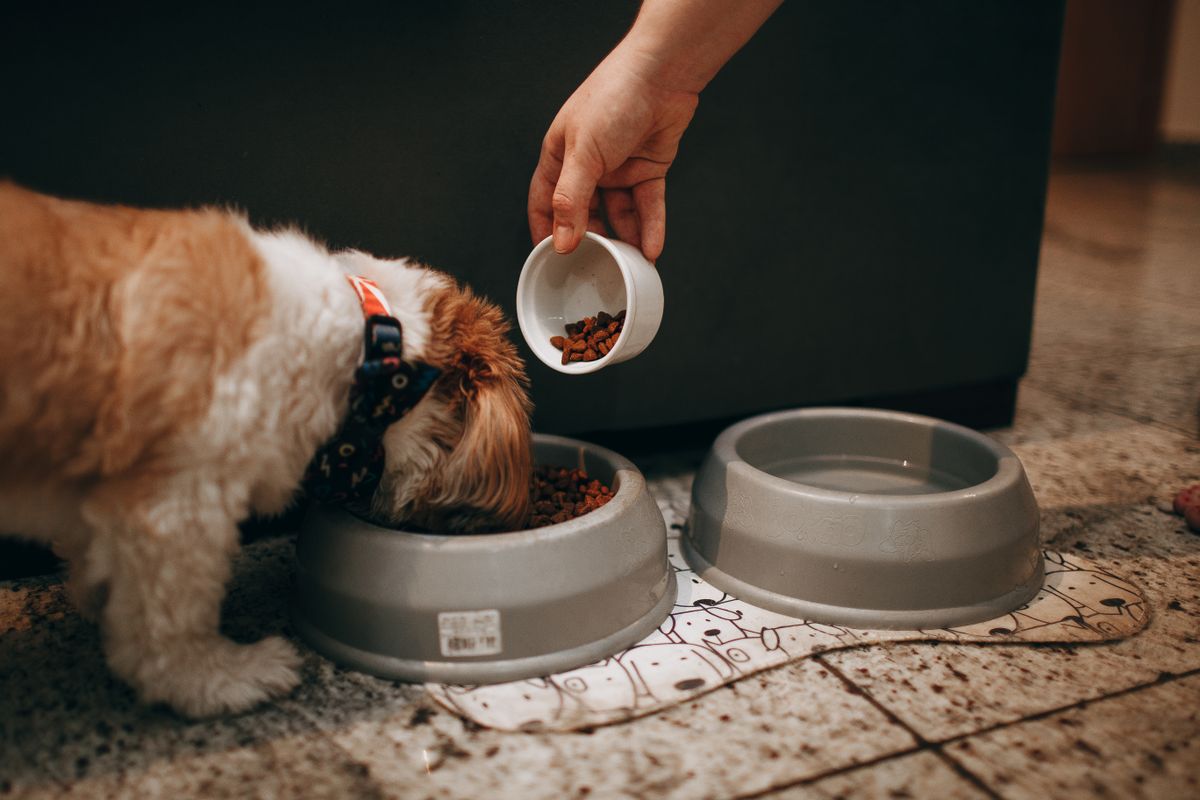
A small dog is not just a large dog scaled down. The kibble has to fit a smaller jaw, the daily calorie budget is a few hundred calories rather than a few thousand, and — as every small-breed owner learns — the dog may still turn its nose up at the bowl. Small-breed formulas exist for all three reasons. This guide compares five of them on published manufacturer facts only: calories per cup, protein and fat, kibble design, and life stage. Wagopedia has not hands-on tested these foods; the picks rest on published specifications and standard nutrition criteria.
The short answer: for most adult small dogs, start with Royal Canin Small Adult if pickiness is the main problem (its kibble is designed for miniature jaws and built around enhanced palatability) or Purina Pro Plan Small Breed for the most calorie- and protein-dense option, at 448 kcal per cup. Every food here is complete and balanced for adult maintenance under AAFCO profiles — the real differences are calorie density (357 to 448 kcal per cup), kibble size, and which dogs each bag is sized for.
Why small breeds get their own food
More calories per pound. Energy needs do not scale in a straight line with weight. The Merck Veterinary Manual's resting-energy formula — 70 × (body weight in kg)0.75 — means a 10-pound dog burns proportionally more at rest than a 40-pound dog: about 350 kcal a day for a neutered 10-pound adult (roughly 35 kcal per pound) against about 985 kcal for a 40-pound dog (roughly 25 kcal per pound), using the method in our feeding guide by weight and life stage. Manufacturers state the same point: Royal Canin formulates Small Adult around small dogs' higher calories-per-pound requirement, and Blue Buffalo adds protein and carbohydrates for smaller dogs' higher energy needs.
Small jaws, small stomachs. A kibble sized for a Labrador is work for a 9-pound dog, so small-breed lines shrink the piece: Royal Canin uses an exclusive kibble design adapted for miniature jaws, Purina describes its kibble as bite-sized and nutrient-dense, and Hill's makes its Small & Mini recipe with nibble-size kibble. A small stomach also means the day's calories must arrive in a small volume — why most of these foods are denser per cup than all-breed adult food.
What we compared, and the baseline every pick clears
Every food below is a dry food for adult maintenance whose label carries an AAFCO nutritional adequacy statement — the baseline for any daily food. AAFCO's adult maintenance profiles set minimums of 18% protein and 5.5% fat on a dry-matter basis; all five picks sit well above those floors. The wording matters: Purina's small-breed formula is substantiated by animal feeding tests using AAFCO procedures, while the others are formulated to meet the AAFCO profiles. The World Small Animal Veterinary Association (WSAVA) Global Nutrition Committee does not approve individual foods — it publishes questions to ask any manufacturer, including whether diets are feeding-trial tested or only formulated to the profiles, and who formulates them.
The five foods, compared
| Food | kcal/cup | Protein / fat | Made for | Distinguishing spec | Best for |
|---|---|---|---|---|---|
| Royal Canin Small Adult | 359 | 25% / 14% min | Adults over 10 months, up to 22 lb | Exclusive kibble for miniature jaws; enhanced palatability; L-carnitine | Picky eaters |
| Purina Pro Plan Small Breed Chicken & Rice | 448 | 29% / 17% min | Adults under 20 lb | Bite-sized, nutrient-dense kibble; live probiotics; AAFCO feeding-trial substantiated | Active small dogs; the most calories per cup |
| Hill's Science Diet Adult Small & Mini Chicken & Brown Rice | 357 | 25% / 15.3%* | Adults 1–6 years, up to 25 lb | Nibble-size kibble; easy-to-digest ingredients; omega-6 and vitamin E blend | The lowest calorie density here; weight-watchers |
| Wellness Complete Health Small Breed Adult Turkey & Oatmeal | 408 | 28% / 16% min | Adult small breeds (feeding chart: 2–25 lb) | Deboned turkey first; probiotics at 20 million CFU/lb; omega-3 at 2% min | Owners who want a turkey-based, whole-food-style recipe |
| Blue Buffalo Life Protection Small Breed Chicken & Brown Rice | 398 | 26% / 15% min | Small-breed adults, generally 25 lb or less | Deboned chicken first; LifeSource Bits antioxidant blend | A middle-density, chicken-first option |
*Hill's publishes protein and fat for this recipe as average nutrient content on a dry-matter basis; the other foods' figures are as-fed guaranteed-analysis minimums. Calorie figures are each manufacturer's published kcal per cup.
1. Royal Canin Small Adult — the picky-eater pick
Royal Canin builds this formula around the two complaints small-dog owners actually have: the dog won't chew big kibble, and the dog won't eat at all. The kibble is an exclusive design adapted for miniature jaws, and the manufacturer describes the food as enhanced in palatability specifically to satisfy the fussy appetites of small dogs. It is made for adults over 10 months old weighing up to 22 lb, at 359 kcal per cup with 25% crude protein and 14% crude fat minimums, and includes L-carnitine, which Royal Canin positions as helping maintain a healthy weight. The AAFCO statement is the formulated kind, for maintenance.
The trade-off is the ingredient list: chicken by-product meal and corn lead it, so owners shopping for a whole named meat first will prefer picks #4 or #5. What you are paying for is the size-specific engineering.
2. Purina Pro Plan Small Breed Chicken & Rice — the calorie-dense pick
At 448 kcal per cup, this is the densest food in the guide by a wide margin — an advantage for a small, active dog with a small stomach, and a portioning hazard for a couch dog. Purina formulates it high in protein (29% minimum, with 17% fat) for highly active small dogs, with real chicken first, and makes the kibble bite-sized and nutrient-dense to make chewing easier. It also carries guaranteed live probiotics and natural prebiotic fiber. Its verification is the strongest here on paper: animal feeding tests using AAFCO procedures substantiate complete and balanced nutrition for adult maintenance. It is made for adults under 20 lb.
If texture is why your dog refuses food, the same line comes in a Shredded Blend version — kibble mixed with tender shredded pieces — at 397 kcal per cup with the same protein and fat minimums. Either way, measure: a heaped cup of a 448-kcal food is a large fraction of a small dog's day.
3. Hill's Science Diet Adult Small & Mini Chicken & Brown Rice — the measured pick
Hill's Small Paws recipe sits at the other end of the calorie range: 357 kcal per cup, the lowest here, and the natural starting point for a small dog that gains weight easily — the cup looks fuller for fewer calories. It is tailored for adults aged 1–6 years weighing up to 25 lb when full grown, made with nibble-size kibble, easy-to-digest ingredients, high-quality protein for lean muscle, and an omega-6 and vitamin E blend. Hill's published average nutrient content is 25% protein and 15.3% fat on a dry-matter basis, and the food is formulated to meet the AAFCO profiles for adult maintenance. Chicken is the first ingredient.
Note the age band: ages 1–6 only — Hill's makes 7+ versions of the same line for mature adults.
4. Wellness Complete Health Small Breed Adult Deboned Turkey & Oatmeal — the turkey-based pick
Wellness leads with deboned turkey, followed by chicken meal and salmon meal, in a recipe designed for the unique health needs of smaller dogs; its feeding chart covers dogs from 2 to 25 lb. The specs are strong: 408 kcal per cup, 28% crude protein and 16% crude fat minimums, an unusually high omega-3 minimum of 2%, and guaranteed live probiotics (20 million CFU/lb minimum). Wellness makes its small- and toy-breed recipes in smaller kibble pieces so little dogs can chew them easily. The food is formulated to meet the AAFCO profiles for maintenance.
This is the pick for owners who read ingredient lists first: a named whole meat up front, grains included, and no by-product meal. At 408 kcal per cup it is dense, so weigh portions for a less active dog.
5. Blue Buffalo Life Protection Formula Small Breed Chicken & Brown Rice — the middle-density pick
Blue Buffalo's small-breed recipe starts with deboned chicken and is made, in the manufacturer's words, with increased protein and carbohydrates to meet the higher energy needs of smaller dogs. The guaranteed analysis is 26% crude protein and 15% crude fat minimums at 398 kcal per cup — the middle of this guide on both protein and density. The line's signature is its LifeSource Bits, a blend of antioxidants, vitamins, and minerals mixed into the kibble. It is formulated to meet the AAFCO profiles for maintenance, for small-breed adults generally 25 lb or less.
Choose it when you want a chicken-first recipe at a middle calorie density and no narrower angle fits your dog.
How much to feed: the cup count changes with the food
The calorie target belongs to the dog; the cups belong to the bag. A 15-pound neutered adult needs roughly 470 kcal a day by the Merck method — about 1⅓ cups of the Hill's recipe at 357 kcal per cup, but barely over 1 cup of Purina Pro Plan at 448. Same dog, a third of a cup apart — why switching foods without re-doing this math is how small dogs quietly gain weight. Our portion chart by weight, age, and activity level has the full table, and the dog feeding calculator does the division for your dog and your bag. Treats come out of the same budget: WSAVA puts treats and extras at no more than about 10% of daily energy.
The picky-eater playbook
- Change the food's engineering before changing brands weekly. A dog refusing standard kibble may be refusing pieces built for a bigger jaw — the problem Royal Canin's small kibble and Purina's shredded texture are designed around.
- Feed meals, not an all-day buffet. Measured meals on a schedule make appetite visible; an always-full bowl hides both pickiness and early appetite loss.
- Protect the bowl's value. If treats fill the 350-kcal budget, the kibble loses by comparison. Keep extras inside the 10% ceiling.
- Transition slowly (next section) — a dog that feels unwell on a new food learns to refuse it.
- Know the vet line. New pickiness paired with weight loss, vomiting, or diarrhea is a veterinary visit, not a shopping problem.
Switching foods without upsetting a small stomach
Change gradually over 5–7 days, per the American Kennel Club's transition guidance: about 25% new food on day 1, 50% by day 3, 75% by day 5, and 100% by day 7 — longer for dogs with sensitive stomachs, as our sensitive-stomach food guide details. Keep the calorie target constant across the switch even as the cup count changes.
The bottom line
For a picky eater, start with Royal Canin Small Adult. For an active small dog, Purina Pro Plan Small Breed's 448 kcal per cup leads the field, with feeding-trial substantiation behind it. For a dog watching its weight, Hill's Small & Mini gives the fullest-looking cup at 357 kcal. Wellness is the ingredient-list-first choice, and Blue Buffalo the balanced middle. Whichever you choose, confirm the AAFCO statement matches your dog's life stage and re-measure portions against the new bag's kcal per cup; more feeding math lives in our Food & Nutrition guides.
Frequently asked questions
What makes small-breed dog food different from regular dog food?
Three things: the kibble is made smaller for small jaws, the food is usually more calorie-dense because small dogs burn more calories per pound than large dogs, and the daily budget it is portioned around is far smaller — a few extra kibbles is a rounding error for a Labrador and a meaningful surplus for a 10-pound dog. Every food in this guide also carries an AAFCO statement for adult maintenance.
How many calories does a small dog need per day?
Using the Merck Veterinary Manual method — resting energy requirement (70 × weight in kg to the 0.75 power) times a life-stage factor of 1.6 for a neutered adult — a 10-pound dog needs about 350 kcal a day, a 15-pound dog about 470 kcal, and a 20-pound dog about 585 kcal. Divide your dog's calorie target by the kcal per cup on your bag to get cups per day, and adjust by body condition over the following weeks.
What can I do if my small dog is a picky eater?
Start with palatability-focused formulas — Royal Canin builds its Small Adult around enhanced palatability for fussy appetites, and Purina's Shredded Blend version mixes tender pieces in with the kibble for dogs that care about texture. Feed measured meals on a schedule rather than free-feeding, keep treats inside the 10%-of-calories ceiling, and transition gradually. A dog that stops eating altogether, or whose pickiness is new and paired with weight loss, needs a veterinarian, not a new brand.
When should a small-breed puppy switch to adult food?
Follow the life-stage statement on the bag and your veterinarian's timing. The foods in this guide are adult maintenance foods: Royal Canin Small Adult is for dogs over 10 months old, and Hill's Small & Mini is for adults aged 1–6 years. Puppies need a food whose AAFCO statement covers growth, fed at growth amounts, until they reach adult size.
How do I switch my small dog to a new food?
Gradually, over 5–7 days per the American Kennel Club's transition guidance: about 25% new food on day 1, 50% by day 3, 75% by day 5, and 100% by day 7 — slower for dogs with sensitive stomachs. Keep the daily calorie target the same across the switch even when the cup count changes, because calorie density varies from 357 to 448 kcal per cup across the foods in this guide.
Sources consulted: Royal Canin, Small Adult product page (for adult small breed dogs up to 22 lb, over 10 months old; crude protein 25.0% min, crude fat 14.0% min; 3,740 kcal/kg, 359 kcal per cup; formulated to meet the AAFCO Dog Food Nutrient Profiles for maintenance) and manufacturer product copy for the US formula (dogs 9–22 lb, 10 months to 8 years; exclusive kibble design adapted for miniature jaws; enhanced palatability to satisfy the fussy appetites of small dogs; L-carnitine; small dogs require higher levels of calories per pound of body weight than large dogs); Purina Pro Plan, Small Breed Chicken & Rice Formula product page (for adult dogs under 20 lb; real chicken first; bite-sized, nutrient-dense kibble; guaranteed live probiotics and natural prebiotic fiber; crude protein 29.0% min, crude fat 17.0% min; 4,012 kcal/kg, 448 kcal per cup; animal feeding tests using AAFCO procedures substantiate complete and balanced nutrition for maintenance of adult dogs) and Shredded Blend Small Breed listing (4,075 kcal/kg, 397 kcal per cup; same protein and fat minimums); Hill's Science Diet, Adult Small & Mini Chicken & Brown Rice Recipe product details (adult dogs 1–6 years, up to 25 lb when full grown; specially made with nibble-size kibble; easy-to-digest ingredients; 3,699 kcal/kg, 357 kcal per cup; average nutrient content 25% protein and 15.3% fat on a dry-matter basis; formulated to meet the AAFCO Dog Food Nutrient Profiles for maintenance of adult dogs); Wellness, Complete Health Small Breed Adult Deboned Turkey & Oatmeal Recipe product details (deboned turkey first; crude protein 28% min, crude fat 16% min; 3,645 kcal/kg, 408 kcal per cup; total lactic acid microorganisms 20,000,000 CFU/lb min; formulated to meet the AAFCO Dog Food Nutrient Profiles for maintenance; feeding chart for dogs 2–25 lb) and Wellness kibble guidance (small- and toy-breed recipes made in smaller pieces for easier chewing); Blue Buffalo, Life Protection Formula Small Breed Adult Chicken & Brown Rice Recipe product details (deboned chicken first; increased protein and carbohydrates to meet the higher energy needs of smaller dogs; crude protein 26% min, crude fat 15% min; 3,682 kcal/kg, 398 kcal per cup; formulated to meet the AAFCO Dog Food Nutrient Profiles for maintenance); Merck Veterinary Manual, nutritional requirements and daily maintenance energy requirements (RER = 70 × (body weight in kg)^0.75; neutered adult factor 1.6 — daily calorie figures computed from this method and rounded); AAFCO Dog Food Nutrient Profiles (adult maintenance minimums of 18% protein and 5.5% fat on a dry-matter basis; nutritional adequacy statement wording for formulated vs. feeding-trial-substantiated foods); WSAVA Global Nutrition Guidelines and Global Nutrition Committee recommendations on selecting a pet food (questions to ask manufacturers, including feeding trials vs. formulation and formulator qualifications; WSAVA does not approve individual foods; treats and extras no more than about 10% of daily energy); American Kennel Club, "How to Switch Dog Foods" (gradual transition over 5–7 days; longer for dogs with sensitive stomachs). Product details checked November 2026; formulations and guaranteed analyses can change — check the bag before buying.
Wagopedia publishes general care information only, not veterinary advice. Always consult your veterinarian about your own dog.