Best No-Pull Harnesses for Dogs That Pull: Options by Size and Strength
As an Amazon Associate, Wagopedia earns from qualifying purchases.
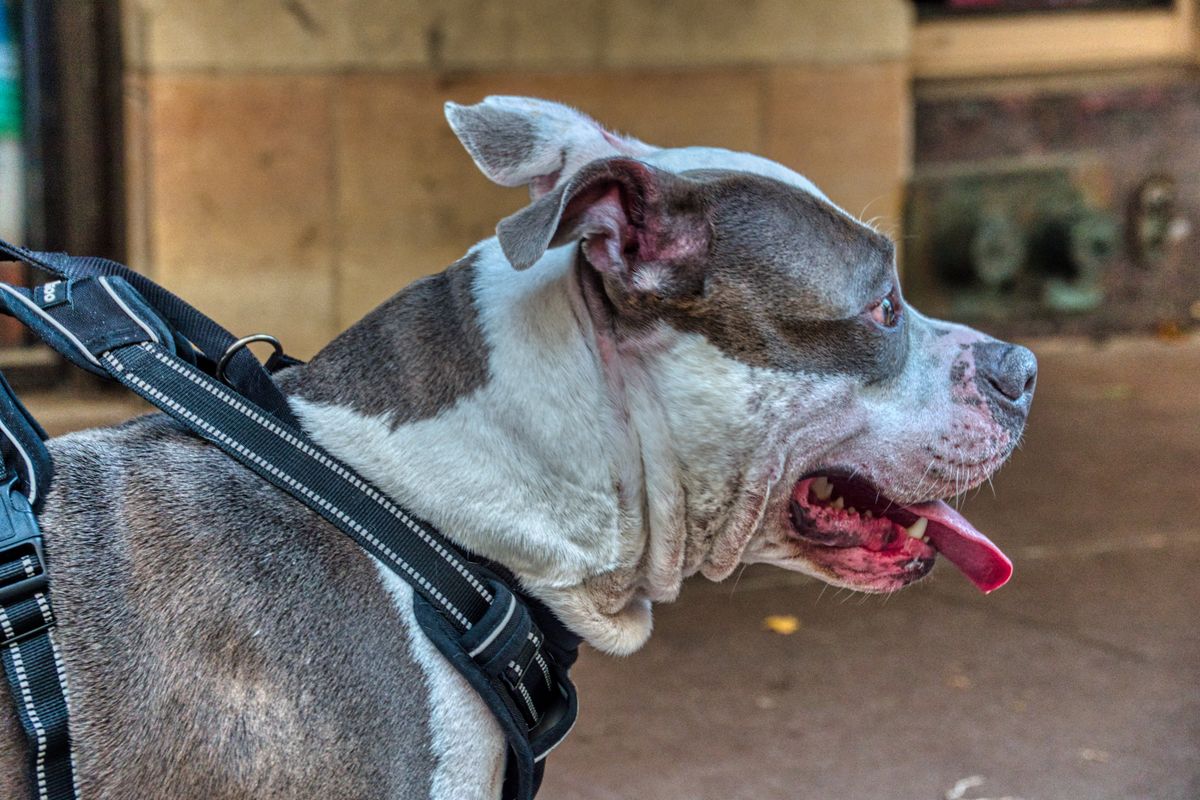
A dog that pulls is not misbehaving so much as physics-ing: a collar puts all of the leash's force on the throat, in the direction the dog is already leaning. No-pull harnesses change where the force lands. The American Kennel Club groups harnesses into back-clip (for dogs that already walk politely), front-clip (which redirect a dog that pulls), and dual-clip designs that offer both. Every harness in this guide is a front-clip or dual-clip design, compared on the manufacturers' published specifications — control design, attachment points, girth sizing, and strap width. Wagopedia has not hands-on tested these harnesses.
One honest limit up front: a harness manages pulling; it does not train it away. The gear below buys you control and safety while loose-leash training does the slow work — and if the puller is a puppy, our first-week checklist covers the walking setup to start with before habits set.
How the two no-pull designs work
- Front-clip steering. The leash attaches at the center of the chest. When the dog surges forward, the pressure turns the dog's chest — and therefore the dog — back toward you, instead of giving them a point to lean against. The PetSafe Easy Walk adds a martingale-style loop across the chest that tightens gently as the dog pulls.
- Back control loop + front ring. The 2 Hounds Design Freedom pairs a patented loop on the back that tightens gently around the chest with a front connection point, and is designed to be used with a double-ended leash attached at both points for two-handed steering.
- Dual-clip everyday harnesses. The Ruffwear Front Range and Blue-9 Balance Harness put a reinforced attachment at the chest of an otherwise normal padded or minimalist harness — less specialized, more versatile, and the chest point does the redirecting when you clip there.
Measure before you buy anything
Every maker in this guide sizes by chest girth, and every one of them warns that weight charts are approximate. The AKC's measuring guidance is to measure the widest part of the chest, just behind the front legs (and the base of the neck for harnesses that ask for it). 2 Hounds Design puts it most bluntly: use the exact girth measurement as the primary method for ordering — weight ranges are only approximate. PetSafe's sizing chart adds the tie-breaker: if your dog falls between two sizes, choose the size up. You will need a soft tape, thirty seconds, and in most households, a helper holding a treat.
The four harnesses, compared
| Harness | Control design | Leash points | Girth range (all sizes) | Distinguishing spec | Best for |
|---|---|---|---|---|---|
| PetSafe Easy Walk | Front clip + martingale chest loop | Front only | 12–49 in. (8 sizes) | Also sized by chest width; Deluxe version adds neoprene padding | The straightforward strong-puller pick |
| 2 Hounds Design Freedom No-Pull | Back control loop + front ring | Front and back | 14–44 in. (7 sizes) | Swiss velvet-lined strap behind the front legs; ⅝-in. or 1-in. strap widths | Pullers that chafe, and owners who want two-point control |
| Ruffwear Front Range | Padded harness, reinforced chest point | Back (aluminum V-ring) and chest | 13–42 in. (5 sizes) | Four points of adjustment; padded for all-day wear | Moderate pullers who wear a harness for hours |
| Blue-9 Balance Harness | Minimal-strap harness, front + back rings | Front and back | About 13½–43½ in. (5 sizes) | Six points of adjustment — the most here; buckle-neck option | Hard-to-fit bodies and shoulder freedom |
1. PetSafe Easy Walk — the straightforward strong-puller pick
The Easy Walk is the design most people picture when they hear "no-pull": a front chest clip and a martingale loop that applies gentle tightening pressure across the chest as the dog pulls, steering the dog sideways instead of letting them haul straight ahead. It comes in eight sizes, from Petite (12–17 inches of girth, under 10 lb) to Extra Large (32–49 inches, 90+ lb), and PetSafe sizes it by chest width as well as girth — the chart lists both, because the chest strap has to sit correctly across the breastbone for the steering effect to work. The belly strap is a contrasting color, a small design touch that makes correct fitting noticeably easier.
The trade-offs: there is no back clip, so this is a training tool rather than an all-purpose harness, and the unpadded straps can rub behind the front legs on some dogs during long walks — the Deluxe Easy Walk version answers that with neoprene-padded straps in four sizes (Small through Large). For a dog whose main job is "stop dragging me down the street," this remains the simplest, most size-inclusive answer.
2. 2 Hounds Design Freedom No-Pull — the two-point-control pick
The Freedom attacks pulling from two directions at once: a patented control loop on the back that tightens gently around the chest to discourage pulling and keep the dog walking straight, plus a front connection point for steering — used together with the double-ended training leash the harness is packaged with. Its signature comfort feature is the strap that runs behind the front legs: it is lined with Swiss velvet specifically to prevent the rubbing and chafing that plain nylon causes in the armpit area, which is the most common complaint about front-clip designs generally.
Sizing runs from X-Small (14–20 inches of girth) to XX-Large (36–44 inches), with your choice of ⅝-inch straps for smaller dogs and 1-inch straps from Medium up — the wider strap is the right call for a genuinely strong dog, since it spreads the tightening pressure over more area. The size range is advertised as fitting dogs from about 14 lb to 250 lb, but follow the maker's own instruction and order by measured girth, not by the weight column.
3. Ruffwear Front Range — the all-day-comfort pick
The Front Range is a padded everyday harness first and a no-pull tool second — which, for a moderate puller, is the right order. It has two leash attachment points: an anodized aluminum V-ring centered on the back for relaxed walks, and a reinforced webbing point at the chest to redirect a dog that pulls. Four points of adjustment let you tune the fit, the padding suits long hikes and full days out, and sizing is a clean five-step girth ladder from XXS (13–17 inches) to L/XL (32–42 inches), measured around the widest part of the rib cage behind the front legs; Ruffwear's own guidance is to choose the larger size if your dog falls between.
The honest caveat for strong pullers: the chest attachment is a reinforced webbing loop rather than a metal ring, and the harness has no tightening element at all — it redirects by geometry, not pressure. A determined, heavy puller can simply lean into it harder than they can into the two designs above. Choose it when pulling is a habit to correct, not a force to contain.
4. Blue-9 Balance Harness — the fit-problem pick
The Balance Harness is built around one idea: fit is control. It adjusts at six points — more than any other harness here — so the neck, chest, and girth straps can each be dialed to the individual dog, which is why it is the standard recommendation for deep-chested, narrow-waisted, or otherwise hard-to-fit bodies (sighthounds and bulldogs are the classic cases). It offers front and back leash rings that can be used singly or together with a double-ended leash, and the buckle-neck version clips on like a collar instead of pulling over the head — a real benefit for head-shy dogs. With minimal strap coverage, it also leaves the shoulders unusually free, which matters for dogs that gait differently in anything restrictive.
Sizing is by ribcage measurement taken about two inches behind the elbow, across five sizes from XS (about 13½–18 inches) to L (about 29–43½ inches), in three strap widths. The trade-off for all that adjustability is effort: six sliders means six things to set correctly and re-check, and an unpadded minimalist harness is the wrong tool for a dog whose problem is raw pulling force rather than fit. Choose it when other harnesses shift, ride into the armpits, or simply never seem to match the dog in front of you.
Fitting checks, whichever you buy
- Girth strap placement: it should sit behind the front legs with room to spare — a strap riding into the armpits will chafe and changes how the dog moves.
- Chest strap placement: across the breastbone, not up against the throat; on a front-clip harness, the clip belongs at the center of the chest.
- Snug, not tight: the standard fit test is two fingers sliding under any strap — looser invites escape and shifting, tighter invites rubbing.
- Re-check after the first walks: nylon stretches slightly and coats compress; a harness fitted to a fluffy dog in the house may be a size loose by the third outing.
- Watch the dog's skin for the first week, especially behind the front legs — early rubbing is a fit problem to adjust, not a product verdict.
The bottom line
For a strong, committed puller, start with the PetSafe Easy Walk (simplest, widest size range) or the 2 Hounds Design Freedom (two-point control, velvet-lined where other harnesses rub). For a moderate puller who wears a harness all day, the Ruffwear Front Range trades a little steering authority for a lot of comfort. And when the real problem is that no standard harness fits your dog's shape, the Blue-9 Balance Harness's six adjustment points solve the fit first — and a harness that fits is the one that works. Whichever you choose, measure the girth, size up when between sizes per the makers' own charts, and pair the gear with actual loose-leash training; browse the rest of our Gear & Reviews section as it grows.
Sources consulted: PetSafe, Easy Walk Harness product page and sizing chart (girth and chest-width measurements for all eight sizes; "measuring your dog is the most accurate way to determine harness size; weight ranges are only approximate; if your dog is between two sizes, choose a size up") and Deluxe Easy Walk page (neoprene-padded straps, four sizes); 2 Hounds Design, Freedom No-Pull Harness product details via retailer listings (patented back control loop; Swiss velvet-lined chest strap; girth-first sizing instruction — girth ranges 14–44 in. across seven sizes; ⅝-in. and 1-in. strap widths); Ruffwear, Front Range Harness product details via retailer listings (aluminum V-ring back attachment and reinforced webbing chest attachment; four points of adjustment; girth sizes XXS 13–17 in. to L/XL 32–42 in.; size up when between sizes); Blue-9, Balance Harness sizing chart via retailer listings (six-point adjustment; front and back rings; buckle-neck design; ribcage measured about 2 in. behind the elbow; sizes XS–L); American Kennel Club, harness types and measuring guidance (back-clip, front-clip, and dual-clip categories; measure the widest part of the chest behind the front legs). Product details checked November 2026; designs and size charts can change — confirm on the manufacturer's page before ordering.
Wagopedia publishes general care information only, not veterinary advice. A harness is management equipment, not a substitute for training or for veterinary care if pulling is paired with coughing, gagging, or breathing changes.