Crate Training a Puppy: A Night-by-Night Schedule for the First Two Weeks
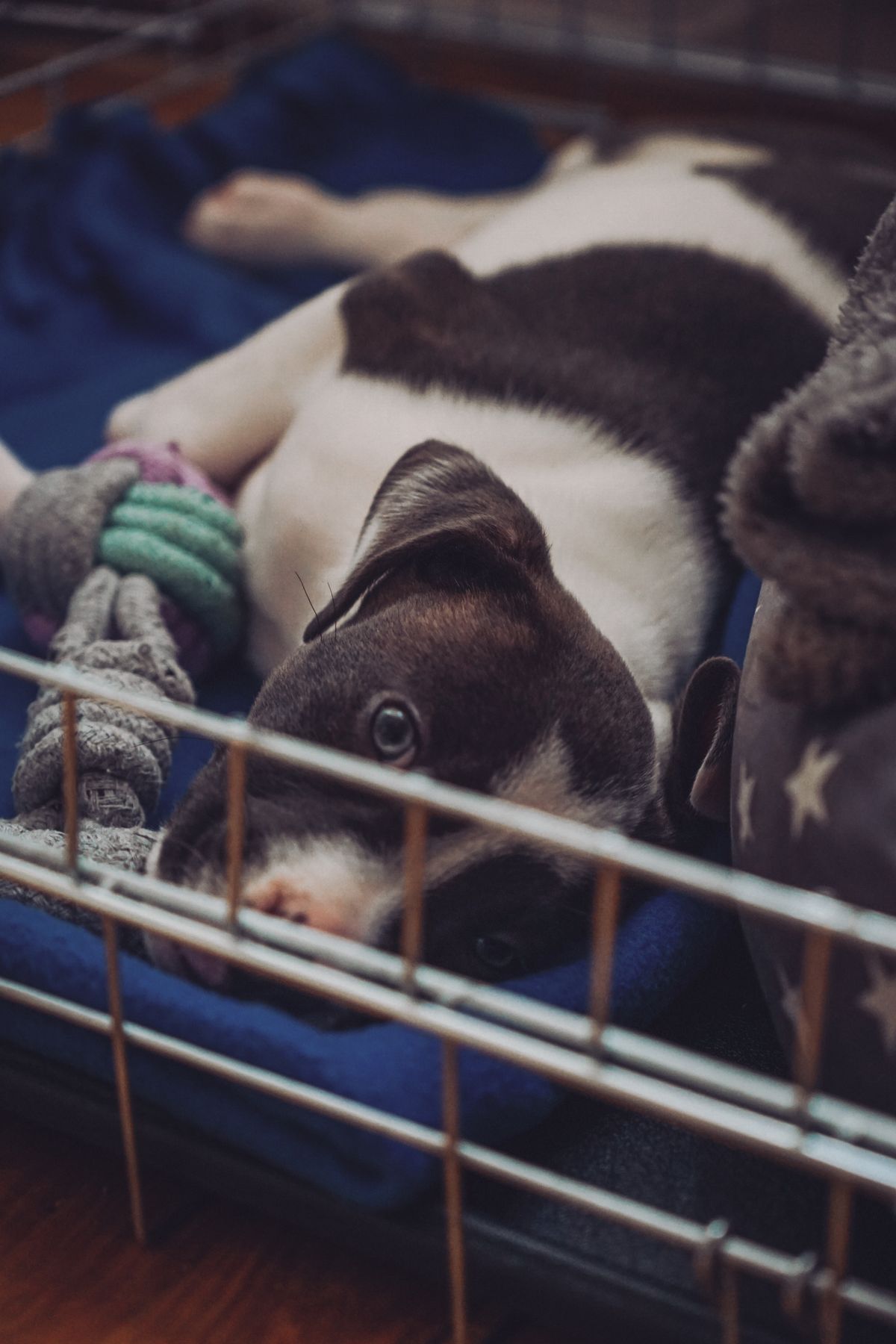
Crate training is won or lost at night. The daytime work matters — it is what makes the crate a place your puppy already likes — but the schedule below is the part owners actually lose sleep over: how many times to get up, when to set the alarms, what to do about whining, and how fast the nights should improve. This schedule assumes a typical puppy who comes home at about eight weeks old. Adjust the clock times to your household; keep the intervals and the sequence.
Before night one: size and setup
Two setup decisions shape everything that follows. The first is size: as our first-week checklist covers, the American Kennel Club's (AKC) rule is that the crate should be big enough for the puppy to stand up, turn around, and lie down comfortably — and not much bigger, because puppies avoid soiling their sleeping area, and an oversized crate quietly provides a bathroom corner. For a growing puppy, use an adult-size crate with a divider and move the divider as the puppy grows.
The second is location and safety. Put the crate near your bed for the first nights so the puppy can hear and smell you; most settle faster that way. Remove the puppy's collar before crate time — the AKC warns that a collar can catch on the crate bars and become a danger. Add washable bedding you will not mind laundering, and nothing else that can be torn into small pieces.
The daytime foundation (the nights depend on it)
A puppy who has only ever been shut in the crate at bedtime will object at bedtime, loudly. The AKC's step-by-step method builds the association during the day, in this order:
- Treats for approaching. Praise and reward the puppy every time they go near the crate; toss treats inside and let them come back out freely.
- Meals inside. Feed meals in the crate, moving the bowl toward the back so the puppy steps fully in.
- Voluntary entry on a cue. Lure, never force. Ideally the puppy enters when asked — forcing a puppy inside builds exactly the association you are trying to avoid.
- Short closed-door sessions while you are nearby. A few minutes at a time, with a food-stuffed chew toy (freezing it first makes it last longer), then build duration gradually.
- Reward calm, not noise. The AKC is explicit on the pair of rules that protect the whole project: never use the crate for punishment, and never release a puppy who is whining — crying must not become the ticket out. Wait for a pause, then open the door.
Run this foundation across the first two or three days alongside the night schedule. Puppies between 8 and 12 weeks old need 18 to 20 hours of sleep a day per the AKC, so daytime crate naps are not extra training — they are the puppy's normal rhythm, and they make the night sessions feel routine.
The bladder math that sets the schedule
Night alarms are not a training failure; they are physiology. The widely used rule of thumb — cited by humane organizations and trainers — is that a puppy can hold their bladder for roughly their age in months, plus one, in hours. An eight-week-old (two months) maxes out around two to three hours. A three-month-old manages about four. That is why the schedule starts with two overnight trips and improves on its own as the puppy grows: by about four months, most puppies can sleep through a seven-to-eight-hour night. Set alarms slightly ahead of the limit — waking a sleeping puppy for a quiet trip beats cleaning a crate and rebuilding the puppy's reluctance to soil it.
The schedule: nights 1–14
Every night runs the same shape: last meal about three hours before bed, water lifted about two hours before bed (a standard step in AKC-based night routines), a final toilet trip as the very last thing, then into the crate with the same cue word and the same small treat. Overnight trips are deliberately boring: leash on, straight to the toilet spot, no play, no fuss, straight back to the crate.
| Nights | Before bed | Overnight trips | What to expect |
|---|---|---|---|
| 1–2 | Daytime foundation work; final toilet trip at bedtime (~10:30 p.m.) | Two alarms, roughly every 2–3 hours (e.g. ~1:00 a.m. and ~4:00 a.m.) | Some protest whining at first settling and after each trip is normal — the puppy has just left their mother and littermates. Keep trips boring; wait for a quiet pause before opening the door. |
| 3–4 | Same routine; crate naps in the day now familiar | Two trips, stretching slightly (e.g. ~1:30 a.m. and ~5:00 a.m.) | Settling gets faster. Many puppies stop fussing at the first put-down and only stir at the alarms. |
| 5–7 | Same routine | One planned trip (e.g. ~2:30–3:00 a.m.) plus a trip only if the puppy wakes and genuinely fusses | First longer stretch of 4–5 hours. If the crate is dry for three straight nights, the stretch is real — keep extending it gradually. |
| 8–14 | Same routine; crate can move a little farther from the bed if you plan to relocate it | One trip, moving later (e.g. ~3:30–4:00 a.m.), or none on nights the puppy sleeps through | By the end of week two, an 11–12-week-old is typically managing 5–6-hour stretches. Full through-the-night sleep usually arrives around four months, not before. |
If a night goes backwards — an accident, or renewed protest — drop back one row for two nights rather than pushing on. Progress in crate training is a trend, not a straight line, and the AKC notes that full reliability can take up to six months even when the night schedule settles within weeks.
Whining at 3 a.m.: the decision tree
- Within the first two weeks, and it's been 2+ hours since the last trip: assume bladder. Take the puppy out, boringly, then straight back. In weeks 8–12, crying is usually a toilet signal, not manipulation.
- Just came back in, or just put down: this is protest, not need. Wait it out nearby without opening the door; reward the first real pause by quietly praising — and only open the crate during a pause, so quiet is what works.
- Escalating panic rather than complaint: pacing, drooling, shaking, scratching or biting at the door, or soiling despite a recent trip are stress signs, not stubbornness. The AKC's guidance is that a dog should never be crated longer than they are comfortable, and never crated if it causes stress or panic. Shorten the sessions, rebuild the daytime steps more slowly, and talk to your veterinarian or a certified reward-based trainer if it persists.
Never stretch a puppy past the math. A puppy left so long that they are forced to soil the crate learns that the crate is a bathroom — the Animal Humane Society warns this makes a puppy significantly harder to house-train. If your work schedule cannot cover the daytime intervals in the first weeks, a midday visit from a sitter or neighbor is not a luxury; it is part of the training plan.
By the end of week two
A puppy on this schedule should be entering the crate willingly for the treat and the cue, settling within minutes, sleeping in 5–6-hour stretches, and keeping the crate dry. The remaining work is duration and context: longer daytime absences built gradually, and the same calm routine in new situations (travel, the veterinarian's office) where a crate-trained puppy has a real advantage. While the puppy's health record is still clean, this is also the window to settle the pet insurance question — enrollment before anything is diagnosed keeps the most options open. The rest of our Puppy Care guides cover what comes next.
Sources consulted: American Kennel Club (AKC), "Step-by-Step Crate Training for Your Dog" (positive associations, reward every approach, meals in the crate, never use the crate for punishment, never release a whining dog, food-stuffed chew toys, remove the collar in the crate); AKC, "How to Crate Train Your Dog" (never crate longer than the dog is comfortable or can hold their bladder; stress and panic signs including pacing, shaking, scratching or biting at the door, drooling); AKC, crate sizing and puppy sleep guidance (crate just big enough to stand, turn, and lie down; puppies 8–12 weeks sleep 18–20 hours a day; full crate reliability can take up to six months); Animal Humane Society crate guidance via trainer references (age-in-months-plus-one maximum crate stretch; a puppy forced to soil the crate becomes significantly harder to house-train); the age-in-months-plus-one bladder rule of thumb as widely cited by humane organizations (8-week-old puppies hold roughly 2–3 hours; most puppies sleep through the night by about four months).
This guide is general information for new owners. Your veterinarian's or trainer's advice for your individual puppy takes priority over any general schedule.