Why Does My Dog Follow Me Everywhere? Velcro-Dog Behavior, Explained
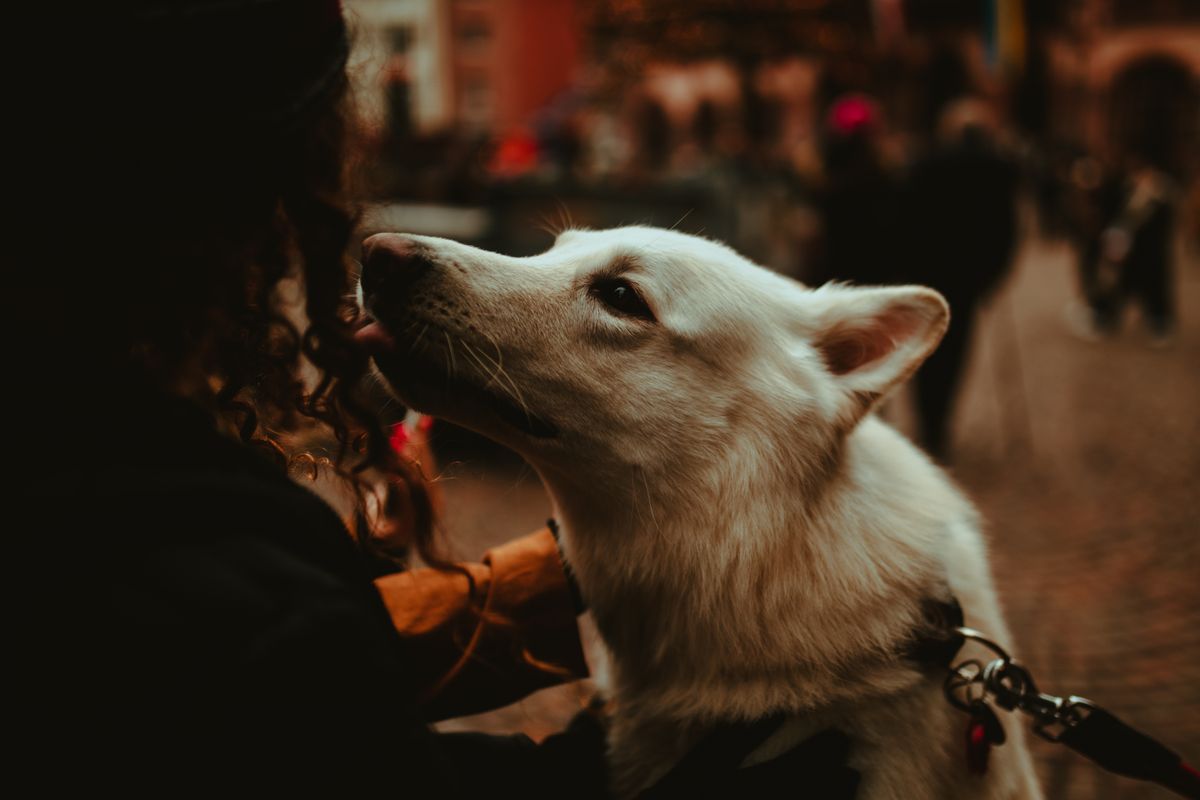
To the kitchen, to the bathroom, to the front door and back again — some dogs treat their owner like a moving landmark and refuse to let it out of sight. Owners call them "Velcro dogs," and the American Kennel Club (AKC) uses the same term: dogs that follow their humans everywhere because they want to be attached to their side. Most of the time it is normal behavior with a straightforward explanation. Sometimes it is a sign that something else — anxiety, boredom, or a change in the dog's health — is going on underneath. The difference matters, because the fix for a bored dog and the fix for a panicking dog are not the same.
What "Velcro dog" actually means
Dogs are pack animals, and in a household, their people are their pack — that is the AKC's framing, and it explains the baseline of the behavior. Following you is, at its simplest, what a social animal does to stay near the group. A Velcro dog takes that baseline further: not just greeting you at the door, but tracking you from room to room, settling where you settle, and watching your every move. It is a preference, not a panic. That distinction is the single most useful thing to keep in mind while reading the rest of this article.
Why dogs follow: the six usual reasons
1. Pack instinct and bonding
The default explanation is also the most common one. Dogs evolved as social animals that stay close to their group, and a dog that follows you is doing the version of that behavior that fits a house. The bond itself is the reward: closeness, attention, and company. Nothing is wrong with a dog that simply likes being near you.
2. Imprinting in puppies
Young puppies, roughly from birth to six months of age, often imprint on their owners and look to them the way they would look to their mother, according to the AKC's veterinary sources. A puppy that shadows you everywhere is usually doing exactly what a puppy is supposed to do — staying close to the being that feeds, protects, and teaches it. Most puppies grow out of the most intense version of this as they gain confidence, especially if they are also socialized with other people and dogs.
3. Positive reinforcement — by you
This one is worth an honest look, because owners usually cause it without noticing. If every time your dog is near you, he gets affection, treats, or play, he learns that following you pays. The AKC puts it plainly: if you reward the clinginess because it flatters you, you are telling the dog the behavior is welcome. The same applies to sleeping arrangements — a dog that sleeps in your bed every night can develop a stronger dependency on being close to you at all times. None of that makes the behavior bad; it just means the habit has a trainer, and the trainer is you.
4. One-person fixation
In a multi-person household, a dog often picks one person and sticks to them. That person is usually the primary caregiver — the one who provides food and walks — or the fun one, who plays and hands out treats. As one professional trainer quoted by the AKC put it, the dog's focus is on that person "because of what they give access to." A rescue dog's history can add to this: previous experiences, including fear of abandonment, can make a dog hold on harder to the one person it trusts. This is also why the dog that follows only you is not snubbing the rest of the family — it has simply done the math on who runs the good things.
5. Breed
Some breeds are built for this. Dogs in the Working and Herding groups were bred to work side-by-side with humans all day, and the AKC notes that over-attachment is a trait "prized and bred into their genetic history." The classic examples are the ones owners nickname first: the Vizsla is so famously clingy it is called the "Velcro Vizsla"; Labrador Retrievers, Golden Retrievers, Cavalier King Charles Spaniels, Border Collies, Australian Shepherds, German Shepherds, and Chihuahuas are all commonly described as breeds that stay glued to their person. If your dog is one of these, following you is less a quirk than a breed feature — and managing it is part of owning the breed.
6. Age and health changes
An older dog may start following more closely because it is losing its sight or hearing and feels less sure of its environment — staying near you is how it stays safe. And a dog of any age that suddenly becomes very clingy may be dealing with a physical problem and keeping you within reach for comfort. The AKC's Chief Veterinary Officer, Dr. Jerry Klein, advises a checkup when clinginess appears out of nowhere: "A dog that suddenly becomes very clingy may be suffering from a physical ailment and keeping you in reach for comfort." A new behavior deserves a medical rule-out before you treat it as a training problem.
Velcro dog vs. separation anxiety: the one difference that matters
A Velcro dog prefers to be near you. A dog with true separation anxiety panics when it is away from you. That is the AKC's dividing line, and it shows up in what happens after you leave the room — or the house.
- Velcro behavior: the dog follows you, watches you, and settles near you. When you leave, it may be disappointed but it copes — it rests, chews something, waits. It can function without you in the picture.
- Separation anxiety: the dog shows distress when left alone — the AKC's guidance lists destructive chewing or digging, barking or howling, urinating or defecating indoors, attempts to escape, pacing, and refusing food while alone. The behavior starts at or soon after departure, and it is panic, not preference.
Velcro dogs may be more inclined to develop separation anxiety, the AKC notes, but it does not automatically follow — and the earlier the pattern is addressed, the less likely it is to reach the point where the dog cannot function alone. If your dog destroys things, injures itself trying to escape, or panics every time you leave, that is no longer a Velcro-dog article — talk to your veterinarian or a certified behavior professional about a separation-anxiety plan.
Creating a healthy balance
The goal is not to stop your dog loving your company. It is a dog that loves your attention and is also fine when you are not around for a period of time. The AKC's recommended approaches:
- Exercise the body and the brain. Physical and mental exercise help a dog settle and relax. A dog with too much energy is more likely to be bored and restless — and to follow you. Long sniffy walks, training games, and puzzle feeding give the dog's brain another job.
- Teach a place to settle. Leave toys and treats near the dog's bed, teach "stay" and "place," and reward the dog for remaining on the bed. The dog learns that settling away from you also pays.
- Spread the love around. If other adults live in the house, have them walk the dog regularly, so the dog's world is not a one-person operation.
- Build short separations. If your dog lacks confidence and sticks to you for protection, encourage it, for short periods, to be across the room or in another room — then stretch the distance gradually. Small wins build a dog that can be alone without drama.
- Set rules and stick to them. If you want the dog off the dinner table or sleeping in its own bed, train for it consistently. Mixed messages — cuddles on the sofa on Monday, scolding for the same thing on Tuesday — teach the dog that closeness is unpredictable, which makes it cling harder.
- Do not limit the dog's social life. Bonding with your dog is good, but make sure the process does not limit its social interactions with other dogs and people. A dog with a wider social world is less dependent on a single person.
- Get help if you are stuck. If the clinginess is escalating despite exercise, training, and routine, a professional dog trainer — or, for anxiety, a veterinary behaviorist — can build a plan for your specific dog.
Questions owners ask most
"Is it bad that my dog follows me everywhere?" Not by itself. Following is normal dog behavior; it becomes a problem only when the dog cannot cope without you, or when it is tripping you up in the kitchen. Judge it by how the dog handles being apart, not by how closely it follows.
"My dog only started doing this recently — should I worry?" A sudden change in behavior is the one version of this that deserves a vet visit first. Pain, vision or hearing loss, and cognitive changes in older dogs can all show up as new clinginess, and those are medical questions, not training ones.
"Will it go away on its own?" Puppy shadowing usually softens as the puppy gains confidence. Adult Velcro behavior in a clingy breed usually does not disappear — it is managed, with exercise, training, and a routine that teaches the dog that being apart is safe and boring.
"Should I ignore my dog when it follows me?" Ignoring the dog entirely rarely helps and can add stress. The better move is to reward the behavior you want — calm settling on its bed, relaxed waiting in another room — rather than punishing the behavior you don't. That is the same redirect-over-scold principle behind most behavior work, including the paw-licking guidance on this site.
The short version: your dog follows you because, to a dog, you are the pack, the food, the fun, and the safe place — and in some breeds, following is the job description. Enjoy the company, build the dog's confidence so it can also be alone, and treat a sudden change in the pattern as a vet question. More behavior explainers live in our Behavior & Training section, and our crate-training schedule covers the first two weeks of teaching a puppy to settle on its own.
Sources consulted: American Kennel Club, "Why Does My Dog Follow Me Everywhere?" (published March 2, 2021; updated July 25, 2023) — pack-animal framing, puppy imprinting (birth to 6 months), positive reinforcement, one-person fixation and rescue history, Working/Herding breed predisposition, older dogs losing sight or hearing, Dr. Jerry Klein's advice on sudden clinginess, the Velcro vs. separation anxiety distinction, and the healthy-balance approaches; American Kennel Club, "Separation Anxiety in Dogs" — signs of distress when left alone (destruction, vocalization, house soiling, escape attempts, pacing, not eating).
This article is general information only and is not a diagnosis or treatment recommendation for your dog. Sudden changes in behavior, or distress when left alone, deserve a veterinarian's examination.