How Long Can a Puppy Be Left Alone? An Age-by-Age Guide With a Sample Schedule
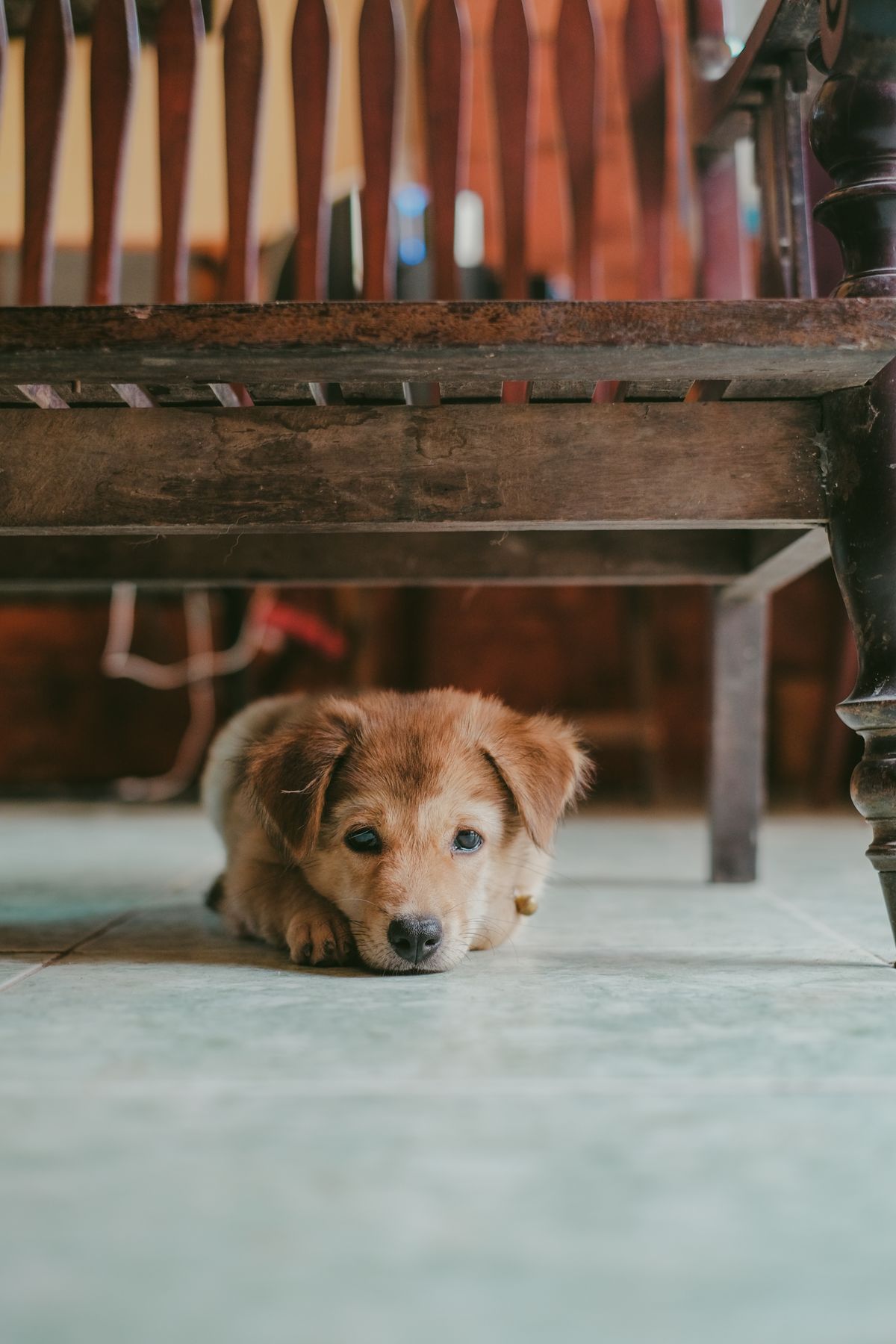
Every new puppy owner hits the same question in the first week: how long can this puppy actually be left alone? The honest answer is shorter than most people hope, and it changes fast. The American Kennel Club (AKC) gives the clearest age-by-age limits in its guidance on leaving a puppy alone: roughly one hour per month of age, topping out at six to eight hours once a puppy is past six months. This guide lays out that table, explains why the limit exists, and shows how to build a real workday around it.
The short answer: follow the AKC’s rule of thumb — about one hour of alone time per month of age. That means roughly 1 hour under 10 weeks, 2 hours at 10–12 weeks, then 3, 4, 5, and 6 hours at 3, 4, 5, and 6 months, and a maximum of 6–8 hours after 6 months. A full workday alone is too long for any puppy under six months without a midday break for potty, food, and company — plan the break first, then build the puppy’s alone-time skill up to the limit gradually.
The age-by-age limits
| Puppy’s age | Maximum time alone (AKC) | What that means in practice |
|---|---|---|
| Under 10 weeks | About 1 hour | Quick errands only. Someone is essentially on puppy duty. |
| 10–12 weeks | 2 hours | A short outing fits; a half-day out does not. |
| 3 months | 3 hours | A morning or afternoon stretch, with a break either side. |
| 4 months | 4 hours | Half a workday — one midday visit makes a workday workable. |
| 5 months | 5 hours | Longer stretches, still with a planned break on workdays. |
| 6 months | 6 hours | Approaching an adult rhythm, but not there yet. |
| Over 6 months | 6–8 hours maximum | The ceiling, not a target — most dogs do better with a break inside it. |
Two cautions belong with the table. First, these are maximums for a puppy who has been trained to be alone — a puppy who has never practiced will not manage the full limit on day one. Second, individual puppies vary: a puppy who is distressed or having repeated accidents is telling you the current stretch is too long for them right now, even if the table allows it.
Why the limit is what it is
The ceiling is mostly physical, not emotional. A young puppy’s bladder is small, and puppies need frequent potty breaks — leave a puppy longer than they can hold it and you do not get a puppy who “learns to wait,” you get accidents that set back house training, because the puppy had no other option. The same clock drives the crate question: a crate only helps house training while the puppy can actually hold it, which is why our crate training schedule builds its night-time alarms from the same age-based math.
Meals set a second clock. Young puppies eat little and often — typically three to four meals a day in the early months — so a long stretch alone can also mean a missed meal, not just a missed potty break. And there is a third, quieter reason: puppies are learning what normal life feels like. Alone time that ends in panic teaches a puppy that being alone is frightening; alone time in doses they can handle teaches them it is boring and safe. That learning is the whole point of building up gradually.
Build up to the limit — do not start at it
The ASPCA’s guidance on alone-time and separation problems is built on one principle: gradual departures. A puppy learns to be alone the way they learn anything — in small, successful repetitions that get slightly harder over time. In practice:
- Start in minutes, not hours. Step out of the room, then out of the front door, for very short absences at first. Return calmly, without a big greeting or a big fuss, so leaving and returning both feel ordinary.
- Practice departures without leaving. Pick up your keys, put on your coat, and then sit back down. When the departure routine stops predicting a long absence, it stops winding the puppy up.
- Lengthen slowly, and vary it. Add time in small steps, and mix short absences in among longer ones, so the puppy cannot predict that every departure is a long one.
- Leave the puppy settled, not excited. A potty break, a play session, and a meal beforehand stack the odds toward a nap — and a sleeping puppy is a puppy practicing being alone successfully.
- Keep the setup safe and boring. A puppy-proofed space or pen, water available, hazards and chewable dangers removed, and a safe chew or food puzzle to work on. Set the space up before the puppy arrives home — our first-week puppy checklist covers what needs to be in place.
If a puppy shows real distress at a given step — persistent barking or howling, drooling, pacing, escape attempts, or accidents in a puppy who can normally hold it — drop back to a shorter absence the puppy handled well and build up more slowly from there. That is the ASPCA’s core method for alone-time problems: the absence should stay shorter than the point at which the puppy becomes anxious.
A sample workday schedule
The table creates a simple piece of arithmetic for anyone who works away from home. An eight-hour workday, plus travel, is longer than any puppy under six months can manage alone — so the day has to be broken up. Here is how that looks for a three-month-old puppy (three-hour limit) and a five-month-old puppy (five-hour limit):
| Time | 3-month-old puppy (3-hour limit) | 5-month-old puppy (5-hour limit) |
|---|---|---|
| 6:30 a.m. | Wake up, potty break, breakfast, play and training — burn energy and fill the tank before the day starts. | |
| 8:00 a.m. | Final potty break, settle in the pen or crate with water and a safe chew. Owner leaves for work. | |
| 11:00 a.m. | Midday visit 1: a family member, neighbor, or pet sitter comes in — potty break, lunch, play, reset the space. | Still within the limit — no visit needed yet. |
| 1:00–2:00 p.m. | Second stretch alone begins after the midday reset (a second shorter visit may be needed depending on the exact return time). | Midday visit: potty break, lunch, play, reset the space. |
| 5:00–5:30 p.m. | Owner home. Potty break first, then dinner, play, and an evening built around company — the puppy has done a lot of being alone today. | |
The pattern matters more than the exact times: no stretch exceeds the puppy’s age limit, every stretch starts with an empty bladder and a settled puppy, and every break includes potty, food if a meal is due, and a few minutes of real interaction. As the puppy ages, the same workday needs fewer breaks — the first months are the hard ones, and they are temporary.
When alone time is not going well
Some protest is normal — a little whining at a departure that settles within minutes is a puppy learning, not a puppy in crisis. The ASPCA describes separation anxiety as a different pattern: a dog who becomes very anxious when left alone, which can show up as excessive barking or howling, drooling or panting, pacing, destructive chewing focused on doors and windows, attempts to escape, or house soiling despite being house-trained. Puppies showing that pattern need the build-up plan slowed right down and, if it persists, professional help — the ASPCA’s routes are your veterinarian first, and a qualified behavior professional for a structured plan. Do not punish any of it: punishment after the fact does not connect to the absence in the puppy’s mind, and punishing anxiety makes anxiety worse.
One more line that always applies: any sudden change in a puppy’s behavior — a puppy who was coping and suddenly is not, or who also goes off food, seems lethargic, or seems unwell — is a veterinarian conversation first, before any training plan. Behavior changes can be the first sign of a health problem, and no schedule fixes those.
The bottom line
One hour per month of age, capped at six to eight hours after six months — that is the AKC’s rule, and the rest is logistics. Build the puppy’s alone-time skill up to that limit in small, successful steps, break every workday into stretches the puppy’s age allows, and treat the midday visit in the early months as non-negotiable rather than a luxury. The months when a puppy needs the most coverage are also the months that pass fastest; by six months, most puppies are working a near-adult day with one good break in the middle.
Sources consulted: American Kennel Club (AKC), “How Long Can You Leave a Puppy Alone?” (age-by-age maximums — under 10 weeks about 1 hour; 10–12 weeks 2 hours; 3 months 3 hours; 4 months 4 hours; 5 months 5 hours; 6 months 6 hours; over 6 months a maximum of 6–8 hours — and the rule of thumb of one hour per month of age), akc.org; ASPCA, “Separation Anxiety” (signs of separation anxiety in dogs left alone, including excessive vocalization, drooling, pacing, destructive behavior and escape attempts, and house soiling; gradual-departure and desensitization approach — keeping absences shorter than the point at which the dog becomes anxious and lengthening them gradually; keeping arrivals and departures low-key; consulting a veterinarian and qualified behavior professionals for persistent cases), aspca.org.
Wagopedia publishes general care information only, not veterinary advice. Your veterinarian’s advice for your individual puppy takes priority over any general guide.