How to Stop Puppy Biting: A Week-by-Week Redirect Plan
As an Amazon Associate, Wagopedia earns from qualifying purchases.
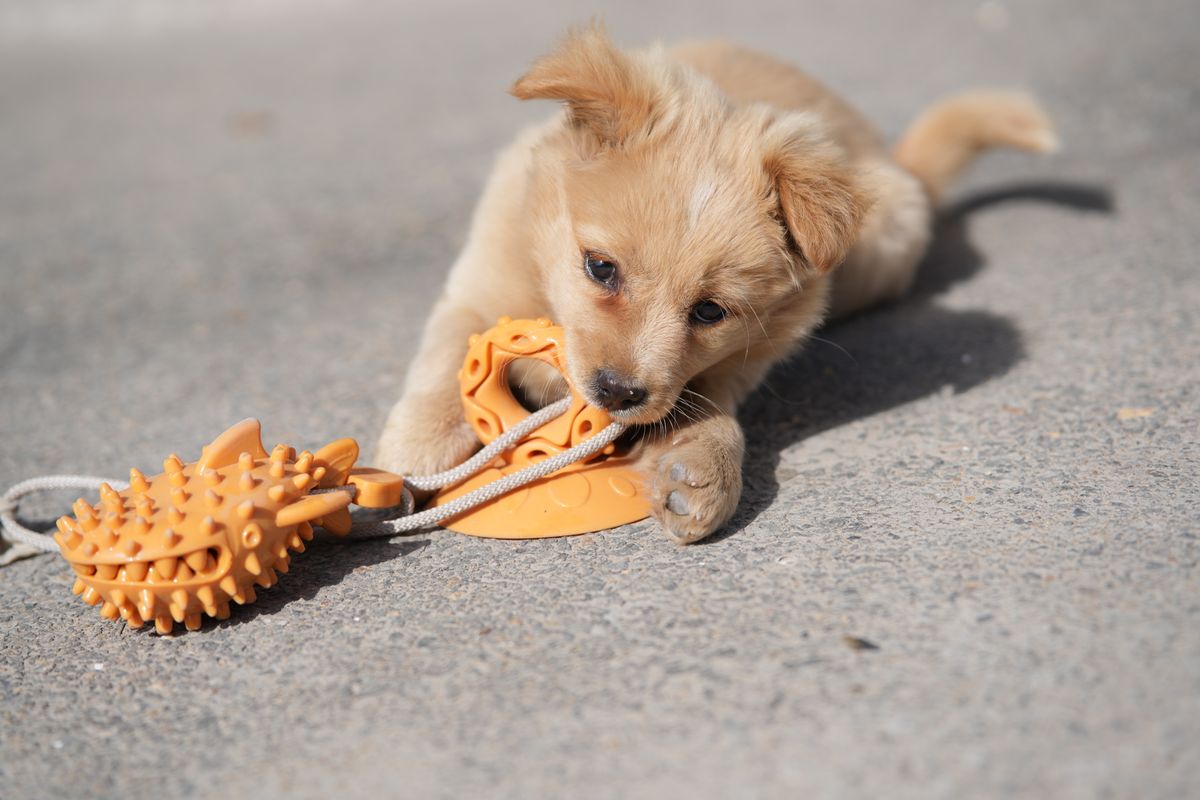
Puppy biting feels personal. It is not. The American Kennel Club (AKC) calls it play biting, notes that a puppy’s mouth is filled with about 28 tiny razor-like baby teeth, and is explicit that the behavior is completely normal for puppy teething and necessary for development — and something you can train away. The ASPCA makes the same point from the other side: mouthing may seem cute at seven weeks, but it is far less endearing at three or four months, in a bigger puppy. That gap — normal now, a problem later — is why a plan helps. This one runs from 8 to 20 weeks, in the order the AKC and ASPCA themselves teach it: first a soft mouth (bite inhibition), then no teeth on skin at all, with redirection to chew toys doing the daily work in every week.
The short answer: teach bite inhibition first, then a simple rule — teeth on skin ends the game. When your puppy bites hard, give a high-pitched yelp, let your hand go limp, and withdraw attention for 10 to 20 seconds; the ASPCA’s protocol is to repeat that no more than three times in 15 minutes, then take a real break. The rest of the time, redirect: keep a chew toy within reach and swap it in the moment teeth head for your hand. Do it the same way, every time, from everyone in the house, and expect steady progress across weeks — not a fix in a weekend.
The two skills, in order
1. Bite inhibition — a soft mouth. Bite inhibition is a dog’s ability to control the force of their mouthing. The AKC explains why it matters beyond puppyhood: there may come a time when a dog is in pain or fearful and puts their mouth on someone — a dog who learned bite inhibition understands not to bite down hard. Puppies learn it from each other first: bite a littermate too hard and the other puppy yelps and stops playing. Your job in the first weeks is to copy that feedback honestly, starting with only the hardest bites, then gradually requiring a gentler and gentler mouth, exactly as the ASPCA sequence lays out.
2. Teeth off skin — the end goal. Once the hardest bites are gone, the rule tightens: any teeth on skin, however light, pauses the game. The ASPCA’s second-stage protocol is a yelp the instant you feel teeth touch you, then walk away and ignore the puppy for 30 to 60 seconds. Gentle play continues; painful play — then any-toothy play — stops. That contrast is the whole lesson.
Two supporting habits run underneath both skills. Redirect, don’t just correct: the AKC advises keeping a puppy chew toy at hand at all times so you can anticipate biting and substitute the toy for your hand or furniture, teaching the puppy what is OK to bite. And protect the setup: a biting puppy is often an overtired puppy (the AKC’s first check is quiet time, a potty break, or a nap), and puppies in this age range need long hours of sleep — our crate training schedule covers the nap-and-night rhythm that keeps overtired biting from undoing your daytime work.
The week-by-week plan: 8 to 20 weeks
| Weeks | Focus | The daily practice | What progress looks like |
|---|---|---|---|
| 8–10 | Bite inhibition: only the hardest bites | Play normally. On an especially hard bite: high-pitched yelp, hand goes limp, praise the puppy for stopping or licking, then resume. Maximum three yelps in 15 minutes (ASPCA) — after that, a calm time-out: ignore for 10–20 seconds, or step away. Start the redirect habit: a toy lives in your pocket or beside you. | The hardest, skin-pinching bites get rarer. Softer mouthing continues — that is expected at this stage, not a failure. |
| 11–12 | Tighten the threshold | Now yelp and pause for moderately hard bites too, working down the ASPCA ladder: hardest first, then next-hardest. Add the AKC’s “game over” rule for persistent biting — turn around, tuck your hands into your armpits (a calming signal and attention withdrawal, per AKC trainer Kathy Santo), and end the session. Redirect ankle ambushes by freezing, then producing the tug toy. | Play sessions run longer before a pause is needed. The puppy starts checking — biting, then looking at you — which means the feedback is landing. |
| 13–16 | Teeth off skin + teething support | The rule becomes any teeth on skin: yelp, walk away, ignore 30–60 seconds (ASPCA second stage). Teething peaks in this window — the AKC notes baby teeth begin falling out at about 3 to 4 months to make room for 42 adult teeth — so upgrade the legal outlets: frozen stuffed chew toys and a rotation of textures. Keep sessions short and end them before the puppy gets wound up. | Biting shifts from hands to toys by default. Expect a teething bump — more chewing overall — even as biting people keeps improving. |
| 17–20 | Proof the habit in real life | Same rules, harder contexts: visitors, excited greetings, walks where the puppy pounces at legs (the AKC’s counter is a high-value treat held next to your leg as you walk). Reward calm, quiet moments deliberately with praise or a piece of kibble — the AKC notes owners forget to reinforce the behavior they actually want. Supervised play with friendly, vaccinated dogs and a good puppy class do the social half of the teaching now. | Mouthing is occasional, soft, and easily redirected. Most puppies are well on the way out of the biting stage; the AKC notes teething is usually complete by about six months. |
The rules everyone in the house follows
- Same response, every person, every time. A rule that only applies with one family member is not a rule the puppy can learn. Post the sequence — yelp, limp hand, withdraw, redirect — where everyone can see it.
- Never yank your hand away. The ASPCA warns that jerking hands or feet away encourages a puppy to jump forward and grab. Let the hand go limp instead; a limp hand is boring.
- No physical corrections. The ASPCA is direct: slapping or hitting a puppy for playful mouthing can cause harder biting, fear of you, and even real aggression — and scruff shaking, nose whacking, and similar punishments are all on its do-not list. The AKC adds that yelling can function as a reward (biting got a response) and can make a puppy fearful of being handled.
- Don’t invite the problem. Avoid waving fingers or toes in the puppy’s face, rough wrestling with bare hands, and games that reward losing control. Choose non-contact play — fetch and tug with rules — over wrestling, per the ASPCA.
- Meet the needs first. Before concluding a puppy is “stubborn,” run the AKC checklist: overtired and needing a nap, needing a potty break, hungry or thirsty, or simply carrying energy that a yard run or a short training game would burn off. A puppy whose needs are met is a puppy who can learn.
- Set up the first week right. Toys within reach in every room, a crate or quiet pen ready for calm time-outs and naps (never as punishment — the puppy must not learn to associate the crate with being in trouble), and the supplies from our first-week puppy checklist already in place before the biting peaks.
When biting is not just play biting
Most mouthing is normal, but the ASPCA flags the exceptions clearly. A playful puppy has a relaxed body and face, even if the muzzle wrinkles. Biting that comes with a stiff or frozen body, lips pulled back to expose teeth, growling, or bites that are much more painful than play mouthing — especially when the puppy is being held, handled, or asked to do something they dislike — can be a fear or frustration response (“temper tantrums” in the ASPCA’s term), not play. Do not yelp at that kind of biting; stay calm, stop, and get professional help promptly, because the ASPCA notes repeated frustration biting is not something a puppy simply grows out of. The qualified routes are a Certified Applied Animal Behaviorist (CAAB or ACAAB), a Diplomate of the American College of Veterinary Behavior, or a Certified Professional Dog Trainer (CPDT) with genuine fear-and-aggression experience. The AKC’s benchmark is simpler to remember: in the words of its Chief Veterinarian, Dr. Jerry Klein, play biting does not mean a puppy is vicious — but if you have not been able to moderate the behavior by the time the puppy is six months old, consult an experienced trainer or animal behavior specialist. And any sudden change in a puppy’s behavior, appetite, or energy is a veterinarian conversation first, whatever the calendar says.
The bottom line
Work the plan in order: soft mouth first (weeks 8–12), teeth off skin next (weeks 13–16), then proofing in real life (weeks 17–20) — with a toy always within reach and the same calm consequence from everyone. Most puppies come through it on schedule, and the mouth you shape now is the mouth your adult dog will use for life. For the toys that make redirection easy, see our guide to the best chew toys for aggressive chewers — the durability and sizing rules there apply to teething puppies’ toys too, with supervision doing the rest.
Gear you need for this
Redirection only works if the substitute is more interesting than your hand. These are the stuffable, durable picks from our chew-toy guide — sized for puppies, always supervised.
Sources consulted: American Kennel Club (AKC), “How to Stop Puppy Biting and Train Bite Inhibition” (play biting is completely normal for teething and necessary for development; bite inhibition and why it matters; high-pitched “ow!” with the caveat that some puppies get more worked up — then turn away, walk away, or use a brief calm crate time; biting means game over; yelling can reward biting and cause fear of handling; Kathy Santo’s turn-around, hands-tucked calming signal; keep a chew toy at hand at all times and substitute it for hands or furniture; prevent pouncing with a high-value treat held next to your leg; overtired puppies need quiet time or a nap; burn excess energy; reinforce calm behavior with positive reinforcement; AKC S.T.A.R. Puppy classes; Dr. Jerry Klein, AKC Chief Veterinarian — play biting does not mean a puppy is vicious, but consult an experienced trainer or behavior specialist if the behavior is not moderated by six months); AKC, “Puppy Teething and Nipping: What to Expect” (about 28 baby teeth; baby teeth begin falling out at about 3–4 months to make room for 42 adult teeth; teething usually complete by about six months); ASPCA, “Mouthing, Nipping and Biting in Puppies” (mouthing is cuter at seven weeks than at three or four months; bite inhibition defined as controlling the force of mouthing; the yelp-and-limp-hand protocol, no more than three repetitions in 15 minutes; time-outs of 10–20 seconds in stage one and 30–60 seconds, every time teeth touch skin, in stage two; tighten rules progressively from hardest to next-hardest bites; substitute a toy or chew bone for fingers and toes; encourage fetch and tug over wrestling; carry a tug toy against ankle ambushes and freeze rather than jerk away; let hands go limp; no slapping, hitting, scruff shaking, or other physical punishment; relaxed body and face indicate play, while stiffness, exposed teeth, growling, and much more painful bites indicate a possible fear/frustration response — seek a CAAB/ACAAB, veterinary behaviorist, or qualified CPDT).
Wagopedia publishes general care information only, not veterinary advice. Your veterinarian’s or trainer’s advice for your individual puppy takes priority over any general plan.