Why Does My Dog Lick His Paws Constantly? Common Causes and What Usually Helps
Occasional paw licking is normal grooming; constant licking has a short list of common causes, from irritation and allergies to boredom. What to…
Clear, practical guides for every stage of your dog's life.
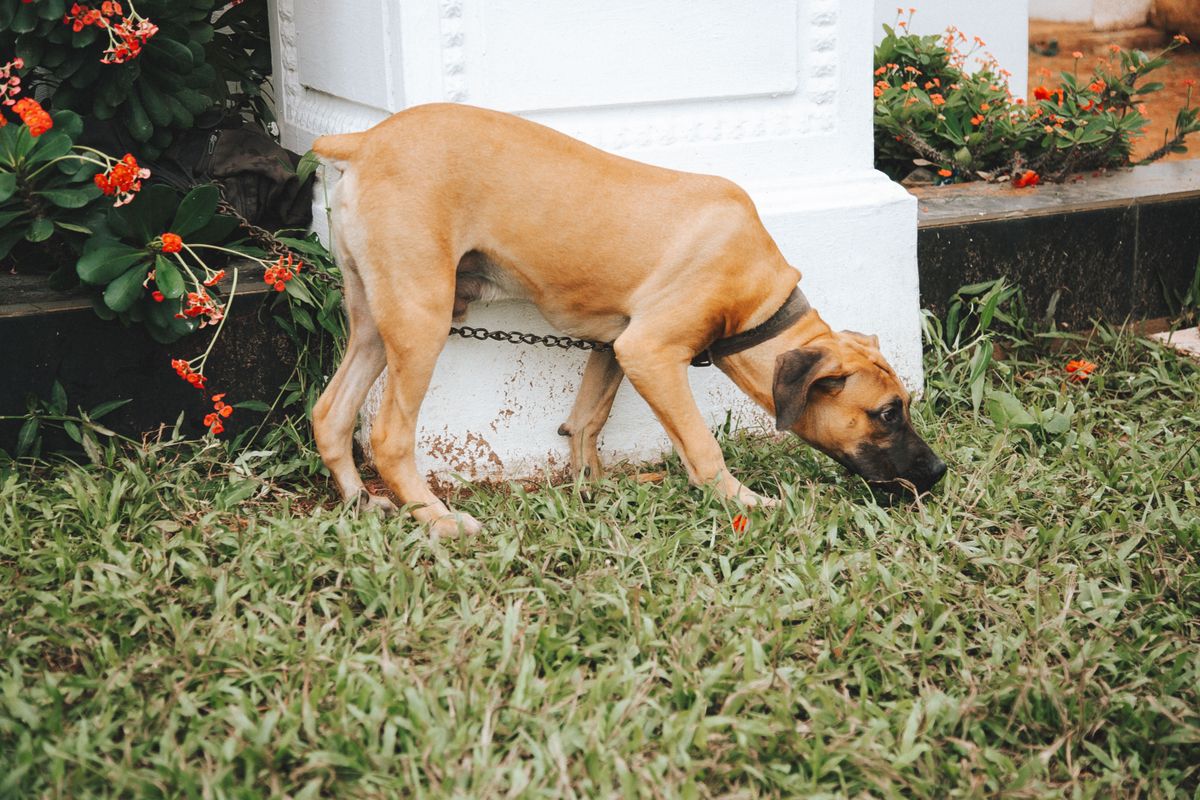
Almost every dog owner has watched it: the walk pauses, the head goes down, and the dog crops the lawn like a very small cow. Then comes the worry — is he sick? Is he missing something in his food? Grass eating is one of the most studied quirks of domestic dogs, and the research points the same way the American Kennel Club (AKC) does: for most dogs, most of the time, it is normal behavior, not a symptom. What matters is the pattern — how often it happens, how the dog looks before and after, and what is on the grass.
The short answer: occasional grass eating is usually normal grazing, not illness. In the largest survey — Sueda, Hart and Cliff (2008), covering 1,571 dogs — only 9% of dogs frequently appeared ill before eating plants and only 22% frequently vomited afterward. Call your veterinarian when grazing is new, frantic, or frequent, or comes with repeated vomiting, blood, diarrhea, lethargy, appetite loss, or weight loss — and keep your dog off herbicide- or pesticide-treated lawns, a real risk even when grazing itself is not.
Very. Sueda, Hart and Cliff, at UC Davis, tested the folk theory that dogs eat grass because they are sick or deficient. In a survey of owners of healthy dogs at a veterinary teaching hospital, 79% of owners whose dogs had daily access to plants reported their dog ate grass or other plants. In their larger internet survey of 1,571 owners, 68% of dogs ate plants daily or weekly, and grass was the plant eaten most often, for 79% of them.
The illness theory failed: only 9% of the dogs frequently appeared ill before eating plants, and only 22% frequently vomited afterward. The AKC, summarizing that work, notes the researchers concluded that grass and plant eating is a normal behavior of domestic dogs. VCA rounds the same findings as less than 25% of dogs vomit after eating grass, and only about 10% show signs of illness beforehand. The study also found no meaningful link to diet type, undercutting the idea that a dog on a complete diet grazes to make up a missing nutrient.
Dogs descend from opportunistic scavengers, and plant eating shows up in wild relatives too. VCA notes that stool samples show 11% to 47% of wolves eat grass, and that wild dogs ate whole prey, including plant-filled stomach contents. The AKC makes the same point: on a complete diet, grazing may simply be instinct — an echo of wild ancestry, not a deficiency.
Grass is roughage: the AKC notes it can be a dog's way of getting more fiber, which helps food move through the digestive system and stool pass more easily, and VCA agrees a lack of fiber can affect digestion and stool passage. If your dog seeks out grass constantly, that pattern — not a single nibble — is worth mentioning to your veterinarian, who can advise whether a higher-fiber food makes sense.
Sometimes the dog simply likes it. The AKC notes some dogs enjoy the taste and texture of fresh grass, especially new spring growth, and that a thirsty dog may mouth wet grass — one more reason to keep fresh water available outside.
A dog left alone in a yard has little to do, and grazing is on the list. The AKC flags boredom or a lack of stimulation as a common driver, and VCA adds that grass eating often increases as owner contact time decreases, and that anxious dogs may graze as a comfort behavior, much like a nervous person chewing their fingernails. If grazing spikes when your dog is alone, the fix is company, exercise, and something better to do, not scolding. It is the same boredom pattern behind other repetitive habits, including the paw-licking we cover in our behavior section.
One pattern does look like self-medication: a dog that rushes out first thing, frantically gobbles grass, and throws up yellow foam. Dr. Jerry Klein, AKC Chief Veterinary Officer, explains that yellow foam, or bile, usually indicates an empty stomach, and bile can irritate that empty stomach — dogs may eat grass to release the bile and feel better. The AKC describes a vet-suggested fix: a small meal first thing in the morning, and sometimes one at bedtime, so bile has food to work on. If it sounds familiar, raise it with your veterinarian.
Eating non-food items is pica, and VCA notes it can be associated with a diet deficient in nutrients, vitamins, or minerals — while noting dogs on balanced commercial diets should not be deficient. The AKC draws the line by intensity: an extreme or compulsive habit — grass plus rocks, dirt, or fabric — is a vet conversation. Ordinary grazing is not that.
Mostly, neither. Cornell's Riney Canine Health Center frames it the same way: infrequent vomiting, such as after eating grass, is likely an isolated incident — but vomiting even once a week may indicate disease. One episode in a bright dog is usually just an episode; a weekly pattern deserves an appointment. Cornell also warns unresolved vomiting can disturb electrolytes and cause serious dehydration — why the red flags below matter.
Plain, untreated grass is rarely the problem. What has been sprayed or left on it can be. The AKC warns that grass treated with herbicides and pesticides can be toxic to dogs, and VCA makes the same point. If you do not know how a lawn was treated, treat it as treated. The second risk is what other animals leave behind: both sources note grazing dogs can ingest intestinal parasites such as roundworms and hookworms from fecal residue contaminating the grass. VCA pairs tolerance of occasional grazing with consistent parasite prevention — keep it current, pick up after your dog, and be careful in heavily used dog areas.
Call your veterinarian promptly when grass eating comes with any of the following:
What dogs can safely eat from your plate is a separate question with dangerous answers — grapes, chocolate, xylitol — covered in Can Dogs Eat Bananas? 25 Common Foods Answered. If your dog eats a toxic food, call your veterinarian immediately.
"Should I stop my dog eating grass altogether?" Not if it is occasional, on untreated grass, and followed by a normal dog — the AKC says intervention may not be necessary then. Step in when it is frequent or excessive, or the lawn is treated.
"Does grass eating mean his food is deficient?" Usually not: Sueda found plant eating across every diet type, and VCA and the AKC note dogs on complete diets should not be deficient. Compulsive non-food eating is the exception that earns a vet visit.
"He ate grass and threw up once. Do I need the vet?" Cornell treats infrequent vomiting after grass as likely an isolated incident. Watch him, keep water available, and call if vomiting repeats, passes 24 hours, contains blood, or comes with lethargy, fever, or a painful belly.
"Why does my puppy graze more?" Sueda found younger dogs ate plants more often, with less illness beforehand and less vomiting afterward — exploration and habit rather than sickness.
The short version: your dog eats grass because dogs do — an inherited, widespread, usually harmless habit, from fiber to boredom to taste. Let relaxed grazing on clean grass be, keep him off treated lawns and current on parasite prevention, and let any change in the pattern — frantic, frequent, or paired with vomiting, blood, lethargy, or appetite loss — be your cue to call the veterinarian. More explainers live in our Behavior & Training section.
Sources consulted: Sueda KLC, Hart BL, Cliff KD, "Characterisation of plant eating in dogs," Applied Animal Behaviour Science 111 (2008) 120–132, doi:10.1016/j.applanim.2007.05.018 — clinic survey (47 owners; 79% reported plant eating) and internet survey (1,571 dogs; 68% ate plants daily or weekly; grass the most frequently eaten plant for 79%; 9% frequently appeared ill before eating plants; 22% frequently vomited afterward; younger dogs ate plants more often); American Kennel Club, "Why Does My Dog Eat Grass?" — instinct, fiber, pica at the extreme, Dr. Jerry Klein on bile and the empty stomach, boredom, taste and thirst, the UC Davis findings summarized (22% vomited, 9% ill beforehand), herbicide/pesticide toxicity, intestinal parasites from fecal residue, the watch list (vomiting, diarrhea, weight loss, decreased appetite, bloody stool, lethargy, lip licking), "leave it" and smaller, more frequent meals; Cornell University College of Veterinary Medicine, Riney Canine Health Center, "Vomiting" — infrequent vomiting after eating grass as an isolated incident vs. vomiting even once a week as a possible sign of disease, blood or coffee-grounds material, lethargy, vomiting over 24 hours, painful belly, and fever as reasons to contact a veterinarian, and the dehydration risk of unresolved vomiting; VCA Animal Hospitals, "Why Dogs Eat Grass" — pica and balanced diets, less than 25% vomiting after grass and about 10% ill beforehand (rounded form of the same survey findings), fiber and digestion, boredom/loneliness/anxiety increasing as owner contact decreases, wolves eating grass (11%–47% in stool samples), herbicide/pesticide and parasite risks, consistent parasite prevention, and treat-based redirection.
This article is general information only and is not a diagnosis or treatment recommendation for your dog. If your dog is vomiting repeatedly, shows any of the red flags above, or may have eaten treated grass or a toxic substance, contact your veterinarian promptly.
Occasional paw licking is normal grooming; constant licking has a short list of common causes, from irritation and allergies to boredom. What to…
A dog that follows you from room to room is usually showing normal pack bonding — sometimes with a breed, puppy, or anxiety reason behind it. What…
Yes — dogs can eat bananas in moderation. See 25 common foods sorted safe, risky, and toxic, with ASPCA and AKC guidance on grapes, chocolate,…