Crate Training a Puppy: A Night-by-Night Schedule for the First Two Weeks
The daytime foundation, the bladder math that sets the alarm times, and what each night of the first two weeks should look like.
Clear, practical guides for every stage of your dog's life.
As an Amazon Associate, Wagopedia earns from qualifying purchases.
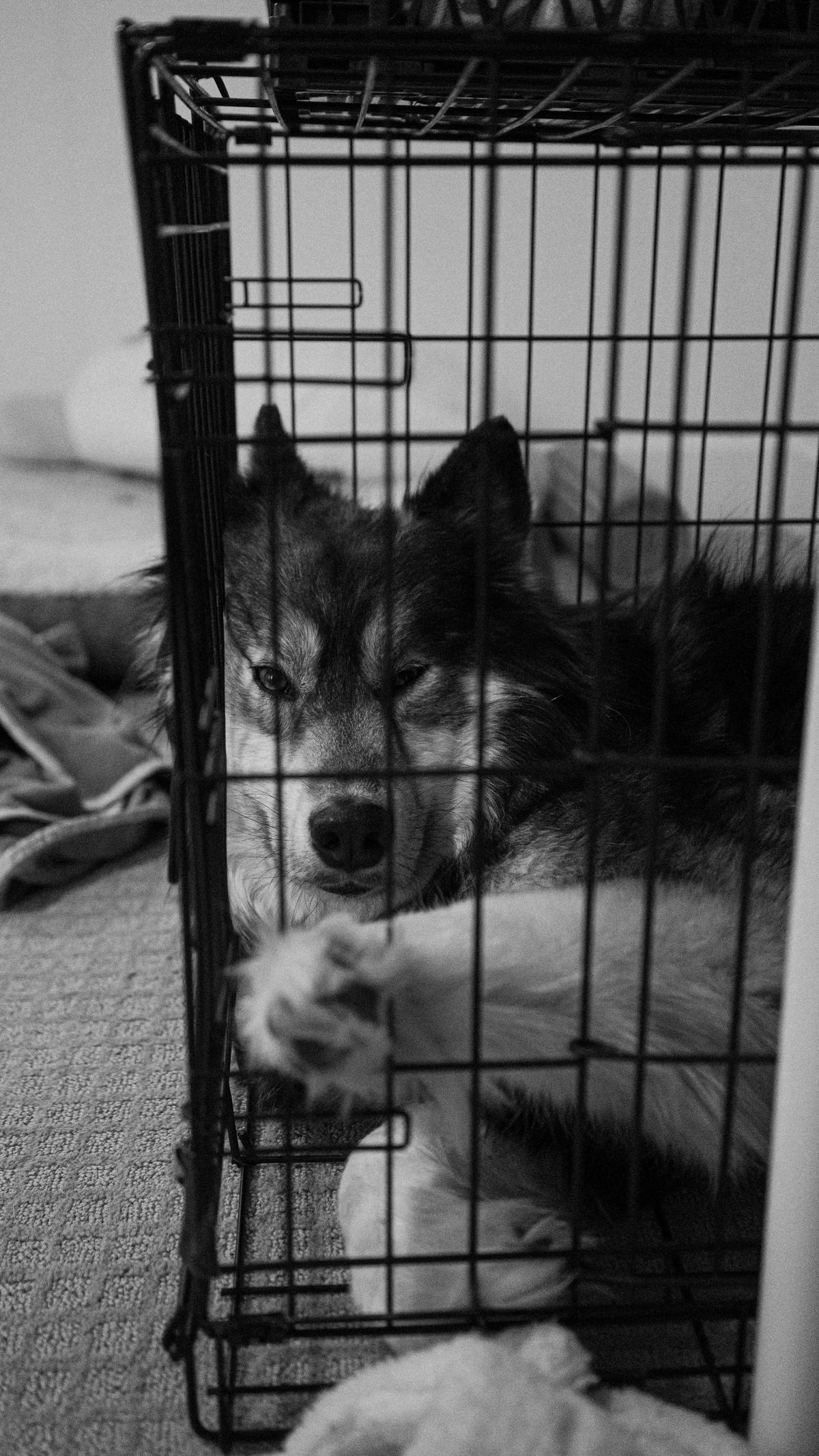
A stronger crate is the purchase owners make after the second bent door or the first chewed tray — and it is easy to buy wrong, because “heavy duty” and “escape-proof” are marketing words, not standards. This guide compares three crates on specifications verified on the manufacturers’ own pages in November 2026: a welded-aluminum crate built specifically for anxious escape artists, the heaviest wire crate in a mainstream maker’s line, and a premium collapsible crate that suits mildly anxious dogs but is honestly not an escape-proof pick. Wagopedia has not hands-on tested these crates. One rule sits above all the specs: a crate contains a dog; it does not treat anxiety. If your dog panics in confinement, the strongest crate on this page is the wrong purchase until a veterinarian or a certified behaviorist has helped you work on the panic itself.
The short answer: run three checks before steel. First, the dog: the ASPCA says crating helps some dogs who learn the crate is a safe place, but adds stress for others — heavy panting, excessive salivation, frantic escape attempts or persistent howling while you are home means do not crate; try a gated room instead. Second, the build: for a dog who has already escaped, solid panels beat wire — Impact’s High Anxiety crate uses aluminum 62% thicker than its standard crates, a steel paddle latch plus four butterfly latches, and half-inch ventilation holes too small for teeth. Third, the fit: the dog must be able to stand, turn around and lie down comfortably, sized from interior dimensions. Verdict: Impact for determined escape artists, MidWest’s Ultima Pro as the heavy-wire step up, Diggs Revol only for calmer dogs who need a better everyday crate — not containment.
The ASPCA’s separation anxiety guidance is the starting point for this whole category. Crating can be helpful for some dogs if they learn that the crate is their safe place, while for others it can cause added stress and anxiety. Its test is practical: watch your dog during crate training and while crated with you at home, and if you see heavy panting, excessive salivation, frantic escape attempts, or persistent howling or barking, confinement in a crate is not the right option — confine the dog to one room behind a baby gate instead. The stakes are physical, not just emotional: the ASPCA warns that escape attempts by a panicked dog can end in self-injury such as broken teeth and cut, scraped paws. That warning is exactly why “buy a stronger box” cannot be the whole answer — a dog injuring itself against a crate that finally holds is not a success story.
How you train matters as much as what you buy. The American Veterinary Society of Animal Behavior (AVSAB), in its 2021 Position Statement on Humane Dog Training, recommends that only reward-based training methods be used for all dog training, including the treatment of behavior problems, and states there is no role for aversive training in behavior modification plans. Applied to crates, that means gradual, paid introductions — the crate predicts food, rest and safety — never forcing a frightened dog in and closing the door. Our night-by-night crate training schedule shows the gradual pattern for puppies; the same patience applies to an adult. And if the signs are moderate or severe — destruction focused on exits, self-injury, distress that starts before you leave — the ASPCA directs owners to a trained professional: a certified applied animal behaviorist, a veterinary behaviorist, or a qualified certified trainer, alongside your veterinarian. Our explainer on why dogs follow you everywhere covers how ordinary velcro behavior differs from separation anxiety.
| Crate | Construction (manufacturer specs) | Door / latches | Sizes in this guide | Best for |
|---|---|---|---|---|
| Impact High Anxiety | Solid aluminum panels, 62% thicker than Impact’s other crates; welded and riveted build | Steel paddle latch + 4 butterfly latches; 0.5 in. round ventilation holes | 30″ to 48″+ (30″: 30.5×20.5×26 in.) | Determined escape artists; the only pick here with a lifetime dog-damage guarantee |
| MidWest Ultima Pro | Professional-gauge steel wire — the thickest wire gauge and tightest mesh spacing MidWest makes | Front + side doors, 2 slide-bolt latches per door; folds flat | 30″ to 48″ (42″: 42.25×28×32 in., for dogs 71–90 lb) | Strong dogs who have not beaten heavy wire; the step-up pick |
| Diggs Revol 2.0 | Collapsible aluminum frame with diamond-shaped steel mesh; solid side panels, continuous mesh roof | Front door with dual-action lock + garage-style side door; every panel locks | S, M, L (Large interior 41.46×28.15×29.75 in., dogs 50–90 lb) | Mildly anxious, crate-trained dogs — not an escape-proof crate |
One model we considered is not in this table, deliberately. The ProSelect Empire steel cage is widely recommended for escape artists, but we could not verify its current specifications on the manufacturer’s (PetEdge’s) own website to the standard this guide requires, so we make no spec claims for it here. Check its terms directly if you get a quote.
Impact builds this crate around the failure modes above. There is no wire to bend and no bar spacing to bite: the walls are solid aluminum sheet, thicker than the company’s other models, and the ventilation is a field of half-inch round holes rather than slots a dog can work a tooth into. The door closes with a zinc steel paddle latch and four extra butterfly latches, and the manufacturer is explicit that every latch must be used as directed. The guarantee is the other half of the proposition: the Lifetime Dog Damage Guarantee covers damage your dog causes to the crate’s panels, door, latches and hardware for the original owner — the only dog-damage coverage in this guide, and a sign of what the crate is actually for. Impact itself adds the honest caveat, in its own product information, that crating supports a training plan and does not treat anxiety. The trade-offs are weight, price and permanence: this is a heavy, non-collapsible crate that stays where you put it, in sizes from 30 inches up. Verdict: if your dog has already escaped or destroyed a wire or plastic crate and a professional agrees crating is still appropriate, this is the containment end of the market — buy it once, and do the training work alongside it.
Not every anxious dog needs aluminum. MidWest Homes for Pets makes the Ultima Pro the top of its own wire line — the strongest, most durable, tightest-mesh crate it manufactures — and its own separation anxiety guidance points anxious-dog owners to exactly this design: a sturdy cage with a thick wire gauge, introduced in short periods that increase gradually, with the crate established as the dog’s safe space. You keep the practical virtues of wire — airflow, visibility, a divider for a growing dog, and a frame that folds flat for storage or travel — and give up the open invitation of thin wire. The honest limit is in the material: it is still wire, and a dog who has already bent wire apart or injured itself trying belongs in the solid-panel category above, or out of a crate entirely on professional advice. Verdict: the right step up for a strong, anxious dog who settles in a crate but overwhelms standard wire — and the sensible first upgrade before spending aluminum money.
The Revol earns its place in an anxious-dog guide for a different reason: injury-conscious design for dogs who are uneasy rather than destructive. Its diamond-shaped mesh exists specifically to remove the sharp edges and gaps Diggs blames for paw and jaw injuries in traditional wire crates, the frame is one solid structure with a continuous mesh roof, and the garage-style side door makes the crate easy to enter voluntarily during training — which is how an anxious dog should meet any crate. But be clear about what it is not: it is a collapsible crate, and collapsible is the opposite of escape-proof. Diggs does not market the Revol as a high-anxiety containment crate, and a dog with a history of breaking out should not be tested against its folding frame. Verdict: an excellent everyday crate for a mildly anxious dog who is already crate-comfortable and whose owner values safety details, storage and looks — and the wrong tool for a determined escape artist.
Match the crate to the dog you actually have. A determined escape artist who has been cleared to crate belongs in solid aluminum with multiple latches and a dog-damage guarantee — the Impact High Anxiety. A strong dog who settles but overwhelms ordinary wire belongs in the heaviest wire its maker sells — the MidWest Ultima Pro. A calmer, crate-trained dog belongs in the safest, easiest everyday design — the Diggs Revol — with no illusion that it is containment. And a dog who panics in confinement belongs in a gated room and a behavior plan, not in any crate on this page. Browse the rest of our Gear & Reviews section for the other spec-first comparisons.
Sources consulted: ASPCA, “Separation Anxiety” (crating can help dogs who learn the crate is a safe place and can add stress for others; signs that crating is not appropriate — heavy panting, excessive salivation, frantic escape attempts, persistent howling or barking — and the baby-gate room alternative; escape attempts can cause self-injury such as broken teeth and cut, scraped paws; moderate-to-severe cases need a certified applied animal behaviorist, veterinary behaviorist or qualified certified trainer); American Veterinary Society of Animal Behavior (AVSAB), Position Statement on Humane Dog Training (2021) (only reward-based methods for all training, including behavior problems; no role for aversive training in behavior modification); Impact Dog Crates, High Anxiety Crate page and site FAQ, November 2026 (aluminum 62% thicker than the company’s other crates; steel paddle latch plus four butterfly latches; half-inch round ventilation openings; Lifetime Dog Damage Guarantee for the original owner covering panels, door, latches and hardware; sizing rule — stand, turn around, lie down comfortably; the manufacturer’s own note that crating supports a training plan and does not treat anxiety); MidWest Homes for Pets, “Separation Anxiety in Your Dog” and Ultima Pro product information (Ultima Pro is the strongest, most durable crate MidWest manufactures, with its thickest wire gauge and tightest mesh spacing; double doors with two slide-bolt latches per door; folds flat, divider panel, leak-proof pan, carrying handle and rubber feet included; 42″ size 42.25×28×32 in. for dogs 71–90 lb; 1-year manufacturer’s warranty; remove collar, tags and leads before crating); Diggs, Revol product page, November 2026 (Revol 2.0 collapsible aluminum frame with built-in wheels; diamond-shaped steel mesh and rounded edges to help prevent paw and jaw injuries; front door dual-action lock that cannot be opened from inside, garage-style side door, every panel locks; interior dimensions Small 23.35×17.01×17.50 in., Medium 29.13×18.86×19.50 in., Large 41.46×28.15×29.75 in. for dogs 50–90 lb; measuring method — head-to-floor height plus 2 in., nose-to-tail-base length plus 2–4 in.; puppy divider included). Product details checked November 2026; designs, size charts and warranty terms can change — confirm on the manufacturer’s page before ordering.
Wagopedia publishes general care information only, not veterinary advice. A crate is a management tool, not a treatment for separation anxiety or any other behavior condition. If your dog panics in a crate, injures itself trying to escape, or shows severe distress when left alone, consult your veterinarian or a certified animal behaviorist.
The daytime foundation, the bladder math that sets the alarm times, and what each night of the first two weeks should look like.
Orthopedic dog beds compared on published specs — foam depth, sleep-surface sizing and cover checks for senior and large-breed dogs.
Pack bonding, breed, or anxiety — what following really means, how it differs from separation anxiety, and how to build a healthy balance.